
Ebrahim Azizi, Head of the Iranian Parliament's National Security Committee, warned the US against interfering with the Strait of Hormuz, asserting Iran's sovereignty after former President Donald Trump threatened to 'take over' the strategic waterway. Despite the heated rhetoric, Iran and the US have established a direct communication line to prevent incidents during a 60-day negotiation period.

Iranian Supreme Leader Ayatollah Ali Khamenei has been killed in a US-Israeli attack, sparking celebrations in Iran and raising questions about the future of the regime.

'Despite the large number of missiles and drones we have already launched, we still possess reserves and missile cities whose doors have not yet been opened,' says Iran's Consul-General Saeid Reza Mosayeb Motlagh.

Trump's comment marks a shift in his repeated statements that Iran hand over its enriched uranium to the US as a sticking point of any potential deal.

Iran hosted a large send-off rally for its World Cup team in Tehran, despite ongoing concerns about visa issues for entry into the United States, where the team is scheduled to play its group matches.

'In such a scenario, Iran could proclaim itself victor, rebuild, re-enforce its diminished regional proxies to further destabilise neighbouring nations and take control of the Persian Gulf and Strait of Hormuz.'

Iranian Foreign Minister Seyed Abbas Araghchi spoke with Indian counterpart S Jaishankar to discuss the West Asia crisis, following discussions with Russian President Vladimir Putin.

Iran's football federation announced its World Cup ticket allocation has been revoked just days before the tournament, leaving many fans unable to attend.

Iran has asserted that maritime movement through the Strait of Hormuz will be strictly controlled by Tehran, stating that passage will be allowed only through designated routes and under Iranian approval.

US President Donald Trump said on Wednesday that Washington is considering a "joint venture" with Iran to secure the Strait of Hormuz, following his announcement of a two-week ceasefire.

Donald Trump expressed optimism about securing an agreement with Tehran to prolong a truce and restore transit through a strategic maritime chokepoint within the next week, even as he criticised political opponents and the media for what he described as their tendency to distort outcomes, even in a hypothetical scenario of complete Iranian military surrender.

Top leaders from the US, Iran, and Pakistan, along with other nations, have gathered in Switzerland for high-level talks aimed at restoring peace in West Asia. These negotiations follow a recently signed Memorandum of Understanding between the US and Iran, initiating a 60-day window for a deal. Discussions focus on Iran's nuclear programme and the fragile interim peace deal, amidst renewed tensions and the fluctuating status of the Strait of Hormuz.

The United States and Iran concluded the first phase of in-person talks in Islamabad, with both delegations exchanging written texts to formalise areas of understanding. The discussions, involving key representatives from both sides, are aimed at reducing tensions and exploring possibilities of a structured understanding.

Iran's foreign ministry spokesperson Esmaeil Baqaei on Sunday said that the recent meeting with US officials was the longest round of negotiations they have had in the past year.

US President Donald Trump on Sunday said that the Israeli strikes on Lebanon's capital of Beirut "should not have happened", warning that such escalation could jeopardise the peace agreement with Iran to achieve a complete solution to the West Asia conflict, which, according to him, is within reach.

Dropped Iran striker Sardar Azmoun has posted a heartfelt message on social media proclaiming his love for his country and wishing the World Cup squad well at the tournament without him.

Iran striker Sardar Azmoun has been left out of the squad for World Cup warm-ups amid reports of expulsion over alleged disloyalty, sparking controversy.

The Islamic Revolutionary Guard Corps (IRGC) on Sunday issued a stark warning that American and Israeli universities in West Asia could be treated as 'legitimate targets' in retaliation for alleged United States and Israeli strikes on Iranian academic institutions and cultural infrastructure.

US President Donald Trump on Monday doubled down on his hardline stance against Tehran while dismissing mainstream media narratives regarding his foreign policy motivations.

Ebrahim Azizi, head of Iran's National Security Committee, stated that diplomatic talks with the US are governed by national interest and security, viewing negotiations as an extension of military efforts.

Iran's Islamic Revolutionary Guard Corps (IRGC) on Saturday (local time) announced the closure of the Strait of Hormuz "until further notice," stating that the strategic waterway would remain shut until the United States ends its "interference" in the West Asia region, Press TV reported.

The US military carried out 'self-defence strikes' targeting Iranian missile launch sites and boats near the Strait of Hormuz, even as President Trump announced progress in ceasefire negotiations, stating Iran's enriched uranium will be 'turned over' or destroyed.

Iranian President Masoud Pezeshkian has confirmed Tehran's participation in Pakistan-facilitated peace talks with the US in Islamabad, according to Prime Minister Shehbaz Sharif. This development follows a conditional ceasefire agreement and aims to address regional tensions.

According to Iranian state media, Islamic Republic of Iran Broadcasting (IRIB), the threat was articulated by Ebrahim Zolfaghari, spokesperson for Iran's Khatam al-Anbiya Central Headquarters.

Pakistan has announced its commitment to continue facilitating talks between the United States and Iran, urging both nations to uphold the ceasefire agreement. Deputy Prime Minister Ishaq Dar highlighted Pakistan's role in mediating recent discussions and expressed hope for durable peace and regional stability.

US Vice President J D Vance is currently in Switzerland, leading critical technical talks with Iran to advance diplomatic efforts on Iran's nuclear programme and secure a lasting ceasefire in Lebanon, following a recently signed memorandum of understanding aimed at de-escalating West Asian hostilities.
A spokesperson for the Central Khatam al-Anbiya Headquarters said that Iran's armed forces are prepared to intensify their response if aggression continues.

US President Donald Trump announced he halted planned military strikes on Iran following requests from Qatar, Saudi Arabia, and the UAE, citing ongoing discussions that could lead to a deal.

Donald Trump has escalated rhetoric against Iran by posting AI-generated images and videos depicting US military strikes, warning Tehran that time is running out to secure a ceasefire agreement.

The fragile ceasefire in West Asia between the US and Iran to halt the hostilities in the region for two weeks faces renewed uncertainty as Tehran reportedly moved to block the strategic Strait of Hormuz once again due to Israel's intensified offensive against Hezbollah in Lebanon, according to Iranian state media Islamic Republic News Agency (IRNA), which US President Trump says was "not included" as part of the ceasefire deal.

Indian benchmark indices, Sensex and Nifty, closed sharply higher, with the Sensex climbing 1,695.40 points and the Nifty surging nearly 2 per cent, driven by a global market rally and a decline in crude oil prices following US President Donald Trump's declaration that his country has ended the war with Iran.
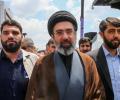
'Mojtaba Khamenei supervised the most recent repression in December 2025 and January 2026 which remains ongoing.'

The Iranian military on Thursday issued a strongly worded response to remarks made by United States President Donald Trump, warning that the ongoing conflict will persist until Washington, DC faces what it described as 'permanent humiliation, regret, and surrender', as reported by Iranian state media Press TV.

In a development that could reshape West Asia's security landscape, US President Donald Trump announced Friday that he will convene an emergency meeting in the White House Situation Room to make a final decision on a broad, multi-part peace deal with Iran.

US President Donald Trump announced the 'reinstatement' of an 'Iranian Blockade' in the Strait of Hormuz, stating the US would charge a 20 per cent levy on transiting cargo for providing security, while Iran warned against any US interference, reaffirming its authority over the critical waterway.

Iran has banned national and club sports teams from travelling to countries it considers hostile, citing concerns over the safety of its athletes.

The Iranian embassy also posted a video purportedly showing the aftermath of the strike, with plumes of smoke visible.

Despite a ceasefire extension, Iran has rejected the United States' conditions for negotiations, creating uncertainty in ongoing diplomatic efforts.

In a post on Truth Social, Trump used unusually harsh language to convey his message, reminding Tehran of his deadline to 'make a deal' or 'open the Strait'.

FIFA president Gianni Infantino confirms Iran will participate in the 2026 World Cup despite geopolitical tensions, urging that sport remain separate from politics.
